

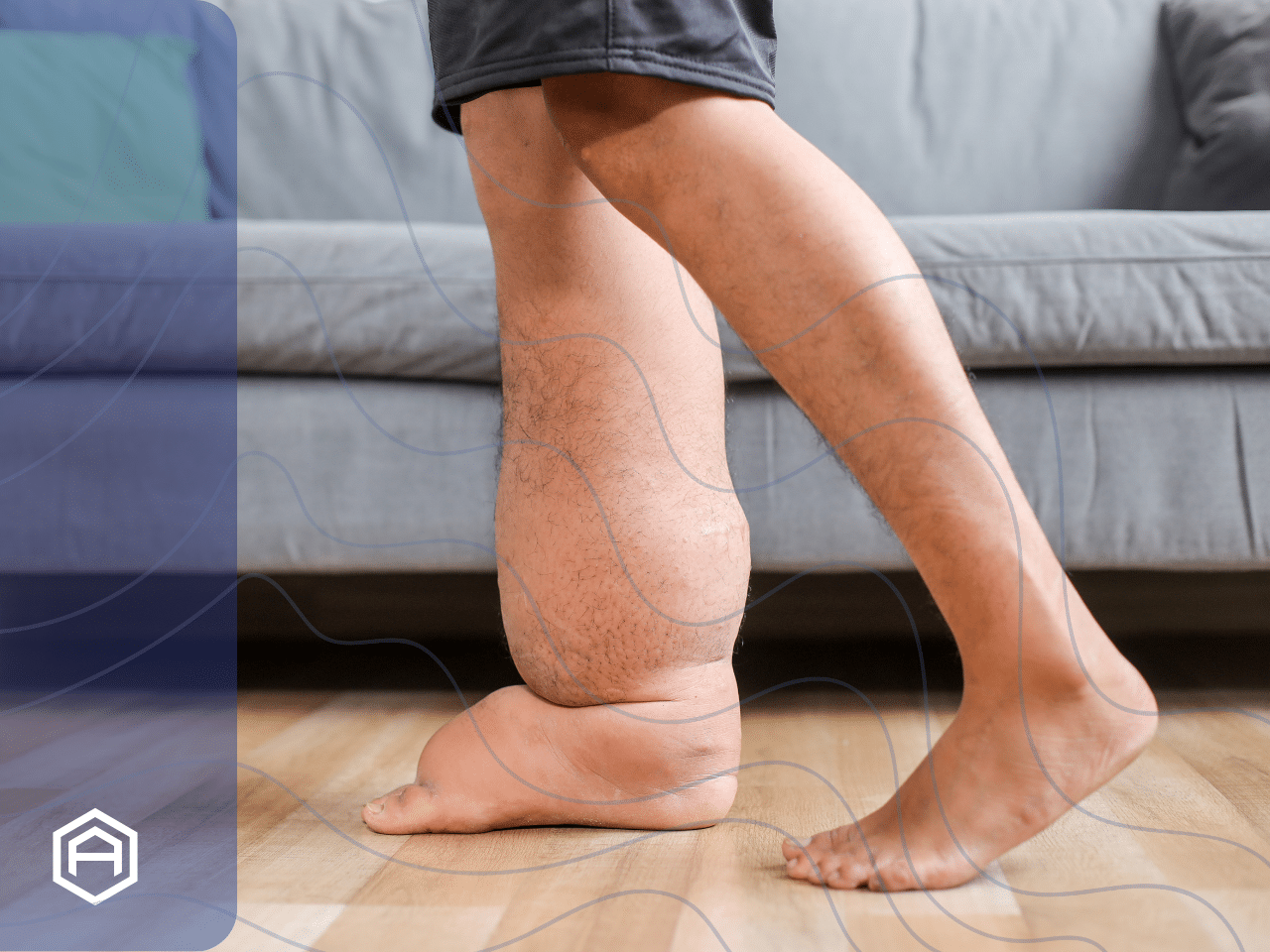
Lymphedema is a chronic, progressive condition that causes swelling in a limb or other body part. Most often, it happens after cancer treatment or other surgeries or traumatic injuries, known as secondary lymphedema, but it can also be the result of a variety of genetic conditions, called primary lymphedema. With proper treatment, it can often be well-managed and a minor inconvenience, but untreated, it can have an unfortunate impact on the patient’s quality of life.
Swelling can occur for many reasons. Any swelling that is new and the source is not known should be evaluated as soon as possible. Swelling, or edema, can be the result of many processes and may indicate a problem with the function of the kidneys or the heart. Some swelling can indicate a systemic problem like congestive heart failure, or an emergency such as a blood clot that has traveled to the lungs causing pulmonary edema. If you notice that you are having trouble breathing, you should seek immediate attention.
Many people who develop lymphedema have a hard time finding a doctor who can recognize and properly diagnose this problem. That is less likely if the swelling is the result of cancer interventions, as it’s well known that radiation, surgery and even chemotherapy can cause damage to the lymphatic system that will result in this swelling, but even in those cases, not all doctors and therapists are aware of the problem and know how to guide the patient in receiving the proper care, referred to as Complete Decongestive Therapy (CDT). If lymphedema is addressed with CDT early, it may resolve to a minimal state and require little daily management aside from the proper use of appropriately fitted compression garments and particular exercises. But untreated, as stated before, it is progressive, and can lead to skin changes and a number of attendant risks.
Let’s talk about what you might experience if you have lymphedema and do not receive timely treatment.
Risks resulting from untreated lymphedema include:
- A limb that is much larger than the one that is not affected
- Skin that becomes hard and/or darkened known as fibrosis
- Skin that is dry and/or itchy and prone to cracking
- Blisters that form from the fluid trying to push out of the skin, resulting in skin weeping known as lymphorrhea
- Infections, known as cellulitis or erysipelas, that occur when blisters break, dry skin cracks or even from a minor scratch
- Skin ulcers that can occur if the blisters mentioned above break or from any small wound
- Heaviness and stiffness of the affected limb(s)
- Difficulty walking due to the heaviness and stiffness
- Pain
With proper treatment, Lymphedema does not usually progress in this way. And in the last decade, increased options exist to help manage the condition and avoid these unwanted outcomes. The options include the standard care of compression, exercise and skin care, and now there are some medications that are showing promise. New surgeries such as Lymphovenous Anastomosis (LVA) and Vascularized Lymph Node Transfer (VLNT) are helping many patients by compensating for damaged lymphatics. A greater understanding of nutrition is helping many keep their weight in a healthy range; that in itself helps reduce the impact.
There are many devices that are used successfully too; some are only used in a clinic and some are used in a home setting by the patient. That’s where a pneumatic compression pump can come in as a very handy helper! Although not a substitute for CDT, but a supplement, these devices can increase patient self-efficacy. With the push of a button, you can pump air into a multi-chambered sleeve appliance that is easily pulled onto an affected arm or leg(s) and lie back to relax while the device helps move the fluid back into the central system.
AIROS pumps can provide treatment for your arm and upper trunk or for your legs into your lower trunk and pelvic area. If you have lymphedema, talk to your doctor or therapist about adding an AIROS 6P or 8P pneumatic compression pump to your options for self-care. I know you will be glad you did.
Please reach out to me for any support if you need it!
Adie MacKenzie, PTA, LMT, CLT-LANA
Clinical Advisor to AIROS Medical